
The Art and Science of the Healing Environment: Neurobiological Validity in Live Therapeutic Harp Practice
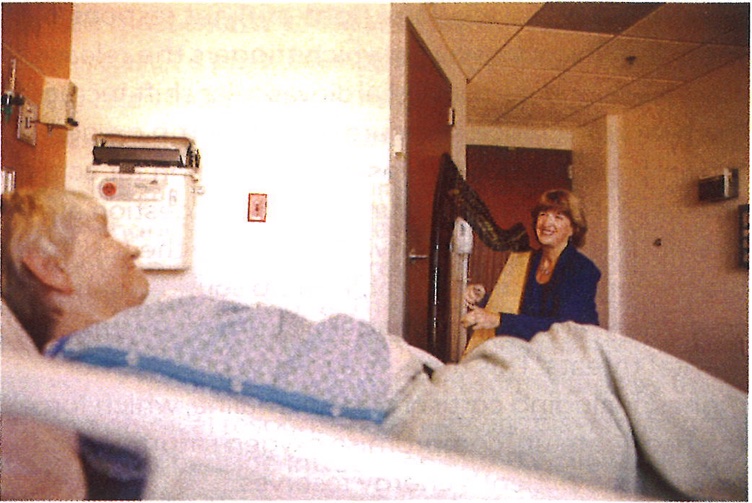
This article was originally published in The American Harp Journal, the official publication of the American Harp Society (Summer 2026, Volume 30, No. 3, pp. 46–55).
This article explores the science of live therapeutic music, with a focus on live harp performance, and music’s profound impact on creating a restorative healing environment. The text examines both the historical roots of therapeutic sound and the modern understanding of the biological mechanism involved, specifically demonstrating how intentional acoustic resonance triggers the relaxation response that actively mitigates the fight-or-flight response.
Ancient Intuition and Observation
Long before digital monitors could track a heart rate to the single beat, humanity understood intuitively that live, stringed music possessed potent medicinal properties. In antiquity, the harp and its ancestor, the lyre, were viewed as instruments of therapeutic intervention. The Bible, Pythagoras, Plato, Aristotle, and Asclepiades of Bithynia speak of the restorative effect of lyre and string music, both on the psyche and the body.
The earliest recorded historical reference to this phenomenon is found in the Old Testament, which documents an explicit mental health intervention by David as he plays the harp for King Saul (1040–970 BCE).
And whenever the harmful spirit from God was upon Saul, David took the lyre and played it with his hand. So, Saul was refreshed and was well, and the harmful spirit departed from him.1
The word “refreshed” is translated here from the Hebrew word רָוַח (ravach or rāvaḥ)—a root word that literally translates “to be wide, spacious, or to breathe freely.” By implication, it means “to find relief, be refreshed, or revive.”2 It is a beautiful description of the physiological response we observe at the bedside today. Expanding on this notion, Jim Greenberg, PhD, Adjunct Faculty in Old Testament at Denver Seminary writes, “The Bible argues that music, at times and not only, is a vehicle that works alongside God and his Word to bring healing, peace and comfort.”3
In the ancient world, particularly classical Greece, the division between “philosophy” (love of wisdom) and “science” (systematic study of the physical world) did not exist. What we call natural science today was practiced as natural philosophy (physiologia). Thinkers used logic, observation, and deduction to explain how the universe, human biology, and disease functioned without relying solely on supernatural explanations. Pythagoras, the fifth century BCE Greek philosopher, viewed the cosmos as a series of mathematical harmonies. Illness occurred when the body lost its internal numeric proportions (symmetria). Because the human body and the physical universe were believed to be governed by the same mathematical ratios that create musical intervals, he believed applying specific acoustic vibrations allowed the body’s physical rhythms to entrain back into harmonic order. As Pythagoras himself left no written works, we rely on Neoplatonic biographers such as Iamblichus (c.245–c.325 CE) for our understanding of Pythagorean ideas.4 Iamblichus tells us:
Pythagoras established musical education as a primary discipline… utilizing certain melodies to counter psychic afflictions, compressions of the mind, and bodily ailments…. He arranged combinations of strings to soothe and heal the soul’s diseases.5
He describes how Pythagoras used specific musical modes, rhythms, and stringed instruments (such as the lyre) as a form of medicine to alter psychological states and heal the body, a true ancient precursor to modern therapeutic music. He utilized specific harmoniai (ancient Greek modes) based on their ethos (each mode’s moral and physiological effect on the body and mind). The Dorian mode, for example, was recognized as stabilizing, grounding, and restorative. It was used to promote emotional balance, counteract lethargy, and bring equilibrium to the nervous system. The Phrygian mode was considered highly stimulating and passion inducing. Because it was associated with excitement or agitation, it was deliberately avoided and another mode substituted when a calming effect was needed. Hypodorian or Hypophrygian modes were considered soothing variations, effective in relieving specific forms of despondency, sorrow, or physical exhaustion.6
In addition to modes, Pythagoras also mentioned other musical elements in relation to human physical health. For example, he prescribed specific combinations of the three ancient tunings—diatonic, chromatic, and enharmonic—as acoustic remedies. By mixing these microtonal intervals, he fashioned melodies calculated to counterbalance disrupting passions, muscle spasms, or physiological collapse.7 Pythagorean musical healing also relied heavily on poetic meter and rhythmic structure: spondaic rhythm is a slow, steady, solemn meter consisting of two long beats (— —). This rhythm was prescribed to lower heart rate, curb agitation, and calm physical frenzies. Iambic meter is a lighter, short-long rhythm (• —) used to re-energize lethargic or depressed states. Paeons and epodes, two ancient poetic choral incantations featuring specific rhythmic structures, were played on the lyre to ward off fatigue, physical illness, and systemic imbalance.8
This lineage carried through classical Greece, where Plato (c.428–347 BCE) and his student Aristotle (384–322 BCE) established the Theory of Ethos, the belief that musical modes could directly alter human character and emotional states.9 In Laws, Plato outlines how the gods gave mankind rhythm and harmony not for mindless amusement, but as a tool to restore order and peace to the human soul when its internal rhythms become disrupted or anxious.10 Similarly, in Book VIII of his Politics, Aristotle observed that musical modes (harmoniai) influence the human psyche, explaining that highly emotional or certain sacred melodies could return an agitated mind to a balanced state.11 Aristotle further categorized musical modes based on three distinct effects: ethical/moral education, action, and enthusiasm/purgation (catharsis) or emotional cleansing.12 However, unlike Plato, who rejected turbulent or passionate modes, Aristotle specifically advocated the use of these modes to achieve emotional and psychological healing. While Plato’s Republic rejected the Phrygian mode for being overly exciting, Aristotle argued it was essential for emotional purgation. He classified the Phrygian mode as an “orgiastic” and “passionate” mode. For individuals prone to extreme religious ecstasy, anxiety, or emotional frenzy, listening to sacred or intense Phrygian melodies brought about a state of release, returning the mind to a calm and balanced state (analogous to a medical treatment or “purgative” remedy). In Politics, Aristotle explicitly describes how sacred melodies and certain modes act as a therapeutic release:
[I]t is clear that we should employ all the harmonies, yet not employ them all in the same way, but use the most ethical ones for education, and the active and passionate kinds for listening to when others are performing (for any experience that occurs violently in some souls is found in all, though with different degrees of intensity—for example pity and fear, and also religious excitement; for some persons are very liable to this form of emotion, and under the influence of sacred music we see these people, when they use tunes that violently arouse the soul, being thrown into a state as if they had received medicinal treatment and taken a purge; the same experience then must come also to the compassionate and the timid and the other emotional people generally in such degree as befalls each individual of these classes, and all must undergo a purgation and a pleasant feeling of relief [iatreias kai katharseos]; and similarly also the purgative melodies afford harmless delight to people).13
Aristotle believed that by listening to music that matches an intense, chaotic internal state (such as the Phrygian mode), the listener undergoes a safe emotional release, ultimately leaving them cleansed, relaxed, and relieved of strain.
In contrast to the Phrygian, Aristotle identified Mixolydian as a mournful and solemn mode. While too plaintive for general youth education, its melancholic quality allowed listeners experiencing grief or despondency to express and discharge pent-up sorrow.14 For general moral stability and grounding (as opposed to acute therapeutic release), Aristotle favored the Dorian mode, describing it as courageous, grave, and promoting a settled state of mind.15 In summary, while Pythagoras viewed music through mathematical ratios and physiological entrainment (restoring numerical symmetry to the body), Aristotle viewed music through catharsis and other psychological effects.
By the Roman era, the revolutionary Greek physician Asclepiades of Bithynia (120–40 BCE) who practiced in Rome, actively prescribed lyre music to treat physical pain. He famously rejected the harsh standard treatments of his era. Individuals who exhibited acute psychiatric symptoms, mania, severe depression, or psychoses were viewed not as medical patients, but as dangerous, unpredictable, or cursed individuals. They were often confined to dark dungeons and put in heavy chains to isolate them from society. Instead, Asclepiades pioneered a humane approach to psychiatric care, introducing therapies such as light and air to move patients out of dungeons and into bright, well-ventilated rooms; using specific musical modes, tempos, and instruments to restore equilibrium; and using gentle physical therapies incorporating hydrotherapy, massage, rocking beds, light exercise, and diet to soothe the nervous system. He believed that health depended on the smooth flow of minute particles (onkoi) through bodily pores. Disease, and particularly mental or emotional disturbance, occurred when these particles became blocked, agitated, or chaotic. Because sound waves consist of physical mechanical vibrations, he used specific modes, instruments, and acoustic qualities to physically alter bodily particle movement and restore equilibrium (psychogenic equilibrium).
Examples of Asclepiades’ approach include the use of gentle, soft music to ameliorate flippant or manic states. He reasoned that low-intensity, smooth acoustic vibrations would soothe the agitated corpuscles in the brain and nervous system without causing further sensory shock. The Phrygian mode should be played for somber or melancholic states because the Phrygian mode possessed an energetic, invigorating character. He used its specific tonal structure to stimulate sluggish particles and re-energize the patient’s system. Asclepiades also extended acoustic therapy to physical ailments like venomous stings and localized pain. He posited that targeted acoustic resonance caused the affected physical tissues to subtly vibrate (“dance”), unblocking trapped particles and expelling localized pain. Asclepiades’ specific musical and medical practices are documented in the following sources:
- Aulus Cornelius Celsus, De Medicina (Book III): Celsus documents Asclepiades’s pioneering work in treating mental illness (phrenitis) through gentle environmental measures including soft music, light, and controlled movement, rather than physical restraint or darkness.16
- Caelius Aurelianus, On Acute Diseases & On Chronic Diseases (5th Century CE): (Translating the earlier 2nd-century work of Soranus of Ephesus). Aurelianus provides detailed accounts of Asclepiades’s use of specific modes (such as the Phrygian) and his mechanical rationale for acoustic therapy.17
- Pliny the Elder, Naturalis Historia (Book XXVI.8.1): Pliny details Asclepiades’s broader clinical philosophy in Rome, emphasizing his rejection of harsh remedies in favor of pleasant, non-invasive therapies cito, tuto, jucunde (swiftly, safely, and pleasantly).18
Due to the plucked nature of producing the sound, stringed instruments, such as the kithara and lyre (historical predecessors of the modern harp), were viewed as the ultimate tools for restoration. Unlike bowed strings, organ pipes, or brass instruments that can sustain continuous, high-amplitude acoustic energy, a plucked harp string reaches its peak volume instantaneously upon contact and immediately begins to decay. Because the sound level continuously decreases, it does not force the patient’s nervous system to assume a prolonged, intense acoustic burden. This makes live harp music exceptionally well-tolerated by patients experiencing severe sensory processing issues, ICU delirium, or hyper-vigilance.
Apollo was the Greek god of light, medicine, reason, and order; all represented by the lyre he carried. His music was contrasted with the chaotic, emotional, and ecstatic music of Dionysus (associated with reed instruments). Thus, playing and listening to stringed instruments was believed to cultivate Apollonian rationality, clarity, and sophrosyne—a state of moderation, temperance, emotional restraint, and rational self-control.19 Plato, in The Republic, strongly favored Apolline stringed instruments (such as the kithara and lyre) over Dionysian wind instruments (like the aulos). He too argued that stringed instruments promoted sophrosyne.20 Pythagoras and his followers also favored stringed instruments because their mathematical ratios could be visually and audibly measured, reflecting the harmonic order of the cosmos (musica universalis) and inducing a balanced, clear-headed state in the human soul.21
In ancient Greece, access to playing plucked stringed instruments (specifically the lyre and kithara) was not restricted to a secret elite or a single caste, but was a function of a person’s social role. Amateur lyre playing was expected of educated citizens as a mark of refinement, so the standard amateur lyre was widely accessible to citizens. In classical Athens, learning to play the lyre was a core part of a free-born male youth’s basic aesthetic education (mousikē). It was expected that an educated gentleman should be able to accompany himself on the lyre while singing poetry. Playing the lyre was viewed as an essential discipline for training the mind, promoting temperance, and cultivating moral balance. Women also played the lyre in private domestic settings, as depicted frequently on ancient Greek vase paintings and poetry.
Kithara performance was the domain of professional master musicians. Unlike the simple lyre, the kithara was a large, heavy, professional concert instrument with a box resonator. Playing it required extensive, specialized training and was reserved for professional male musicians who performed at major public festivals, sacred competitions (such as the Pythian Games at Delphi), and state rituals honoring Apollo. These performers held high social prestige and competed for substantial prizes and public civic honors.22
The Physics of Live Sound: Why “Live” Matters
Ancient observations of live therapeutic music’s healing benefits have been corroborated by modern medicine through the documentation of precise, predictable neurological responses. To defend the validity of therapeutic music in modern healthcare, the practitioners of therapeutic music must answer a fundamental question: Why does live music elicit a physiological response when a digital recording often fails to do so? The answer lies in the physics of acoustic sound versus compressed digital audio.
When a patient listens to recorded music through a smartphone or hospital television speaker, they are experiencing a highly compressed audio file delivered via a rigid electronic cone. This process strips away the rich, multi-layered frequencies and harmonics that occur naturally. Those layers of sound are key to eliciting physical responses. Conversely, playing a harp at a patient’s bedside introduces sound waves that are vibrational disturbances traveling through matter. Given that up to sixty percent of the adult human body is composed of water, the physical laws of biomedical acoustics dictate that the body serves as an incredibly efficient conductor of sound. Because acoustic waves travel over four times faster through fluid-dense mediums than through the air, the live resonance of an instrument such as the harp acts directly upon the patient’s cellular and fluid systems that function as an efficient medium for vibrational conduction.23
Acoustic Resonance and Sympathetic Vibration
Acoustic resonance is the process by which sound increases via the interaction of sound waves with other bodies, resulting in natural amplification. When a harp string is plucked, the string itself doesn’t move enough air for people to hear it well. But when that vibration travels into the hollow wooden soundbox of the harp, the wood starts to vibrate at that exact same speed, acting like a natural megaphone or amplifier to push rich sound waves out into the room. Sympathetic vibration is the result of those sound waves hitting something else tuned to the same pitch. This can be heard clearly when all the C strings on a harp hum after only one is plucked.
When a string is plucked on the harp, it sends out uncompressed physical sound waves that travel through the air. Through sympathetic vibration, the sound waves cause the patient’s body to gently match the steady, organized rhythm of the live music. This physical connection is what signals the brain to stop pumping out stress hormones and allows the heart rate to slow down. The patient isn’t just hearing the harp through their ears; their entire body is physically tuning itself to the instrument. This is the foundation of vibroacoustic resonance, the kinetic massaging of the nervous system via sound frequencies. In medical literature, this is typically studied under low-frequency sound stimulation.24 In a similar manner, the ancients believed that if a patient’s internal rhythms or “pores” were tense and rigid, introducing a mathematically pure, harmonious frequency from an external source would force the body’s internal tissue to match the incoming wave, relaxing its tension.
Auditory Entrainment
The human body is naturally prone to entrainment, the synchronization of two or more rhythmic cycles. In this biological phenomenon, an internal physiological rhythm synchronizes with an external periodic rhythm that allows the biological rhythms of a patient to align with the musical pulse of the acoustic instrument or harp. The heart rate synchronizes to slow and steady rhythms. The respiration or breathing slows to match the rhythm. The blood pressure stabilizes as the body enters a relaxed state.25
A case history from my own practice offers one clear example of how this process works. An infant lying in the Neonatal Intensive Care Unit (NICU) bassinet was in profound autonomic distress: the baby’s heart rate was skyrocketing, hovering dangerously near 200 beats per minute (bpm). As I began to play, the response was instantaneous. The moment the live, physical vibrations of the harp met the room, the numbers on the heart monitor gave a quick flutter as the infant’s nervous system registered the shift in its environment. The numbers on the heart monitor began descending steadily downward: 180, 160, 150… until finally, the heart rate stabilized around 135 bpm, within normal range for an infant. The physiological shift in the room was also notable. The profound tension holding the parents dissipated. Looking over, I saw that they had both drifted to sleep right in their chairs. Both the baby and the parents responded and entrained to the slow steady rhythm of the harp. The nurse stated she felt more calm as well.
The Intentional Caring Human Presence
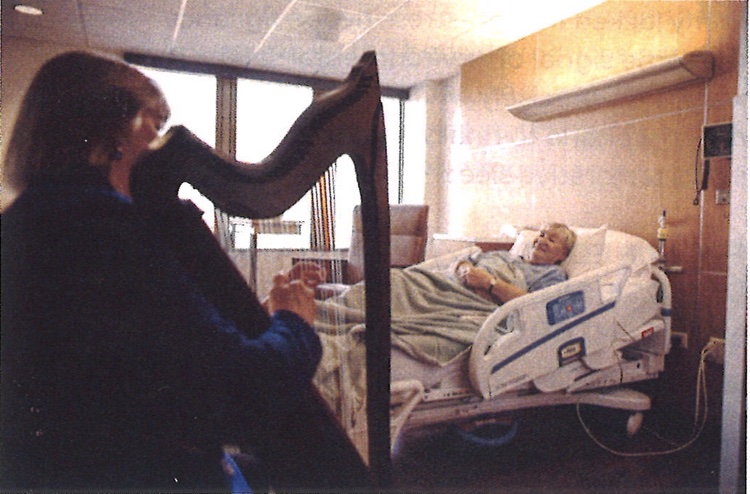
Beyond the acoustic physics of the instrument, the intentional, caring human presence of the practitioner acts as a vital catalyst in the healing process. In high stress settings like an intensive care unit, a compassionate caregiver helps create a calm healing environment. To analyze the core components of human caring in healthcare, Moghadas, Rad, and Ghaemei (2022) conducted a formal concept analysis. The researchers systematically evaluated published literature up through September 2020 across major electronic databases, including PubMed, Scopus, Ovid, and Google Scholar, eventually synthesizing thirty-nine relevant studies to clarify the boundaries and attributes of the concept. Through this structural framework, the authors identified several core defining attributes of human caring, highlighting that an authentic, real presence at the patient’s bedside, characterized as a state of “being with” rather than simply performing physical tasks, is essential for holistic care. The outcome of the analysis demonstrates that integrating scientific, technical competency with an empathetic human presence directly fosters psychological comfort, builds interpersonal trust, and helps the patient achieve a measurable state of physiological and emotional well-being that technical clinical interventions alone cannot replicate.26
Modern Science: The Autonomic Nervous System
In the previous case study, when the infant’s heart rate descended from nearly 200 bpm down to 135 bpm, we were witnessing a profound shift in the autonomic nervous system that divides into two primary branches: the sympathetic nervous system and the parasympathetic nervous system. The vagus nerve, when stimulated, acts as a “switch” from the sympathetic to the parasympathetic nervous system.
The sympathetic nervous system is the body’s rapid response system to perceived threats or high-stress situations. This is called the fight-or-flight response. There is a hormonal surge which triggers the release of adrenaline and cortisol. A cardiovascular shift increases the heart rate, blood pressure rises to pump oxygen to the limbs, and muscles tense in preparation for action or escape. Non-essential functions like digestion are slowed. In a high-stress environment like the ICU, the brain interprets unpredictable sharp sounds, alarms, machinery, and clinical chatter as immediate environmental threats. This triggers a release of stress hormones, including cortisol and adrenaline, which force the heart rate up, compromise oxygen saturation, and exhaust the patient’s energy reserves.
The “relaxation response” is a term coined by Dr. Herbert Benson of Harvard Medical School to describe the body’s innate ability to counteract the toxic effects of a chronic stress fight-or-flight response.27 When Benson conducted his research at Harvard Medical School in the late 1960s and early 1970s, Western medicine viewed the autonomic nervous system as entirely involuntary—it was believed that a person had no conscious control over their heart rate, blood pressure, or stress response. The vagus nerve connects the brainstem to the heart, lungs, and abdomen and acts as the “switch” for the relaxation response. As harp music is introduced, the vagus nerve is stimulated by auditory entrainment. One’s heart rate is reduced and breathing becomes calmer. Inflammatory responses switch off. The immune system’s calming chemicals are released. Live therapeutic music helps inhibit the patient’s fight-or-flight response and transition the body into the relaxation response.28
Benson’s research investigated the physiological effects of deep focus by measuring oxygen consumption, heart rate, blood pressure, respiratory rate, and brain wave activity in subjects during meditative practices. His methodology involved monitoring participants as they repeated a single word, phrase, or sound while maintaining a passive attitude toward intruding thoughts. Eliciting the relaxation response leads to a dampening of the sympathetic nervous system activity, significantly reducing oxygen consumption, heart rate, and blood pressure, thereby mitigating the physiological toll of chronic stress. Physiologically, it represents a profound shift in the autonomic nervous system, moving control away from the sympathetic nervous system and activating the parasympathetic nervous system. When the relaxation response is triggered, a highly coordinated release of physical and chemical changes occur across multiple systems in the body.
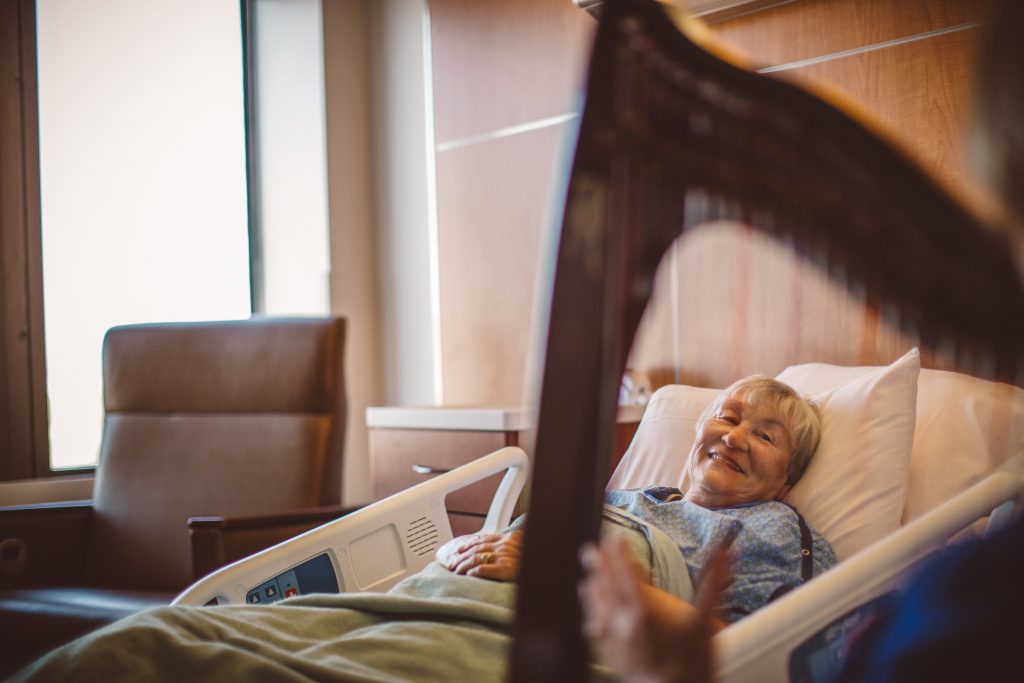
Benson identified four components to triggering the relaxation response: a mental device or focus, a quiet environment, a passive attitude, and a comfortable posture. Live therapeutic harp music acts as an external, automated generator of at least three of these components, making it an incredibly powerful tool for patients who are too ill, anxious, or cognitively overwhelmed to practice meditation on their own.
First, the harp is highly effective as the “Mental Device”: the pure, uncompressed acoustic frequencies and harmonics and predictable intervals of plucked harp strings serve as the ultimate sensory focus. The patient does not have to do any mental work; the music gently captures their attention, quieting the internal chatter of the brain’s default mode network. Second, the harp effectively provides an “Environment of Safety”: the physical presence of a responsive practitioner alters the cold, sterile clinical environment, creating the “quiet sanctuary” Benson required. The harp also helps facilitate the “Passive State” through the practice of precise entrainment: by matching and then slowing down the tempo, the music physically entrains the patient’s heart and respiratory rates downward. The music does the physiological heavy lifting, guiding a vulnerable, passive patient into the relaxation response.29
The human brain is designed to co-regulate with its environment. However, as the uncompressed acoustic waves filled the room in the case study described above, the parents’ sympathetic nervous systems—formerly locked in high-stress hyper-vigilance—received the same signal of environmental safety. This biological shift is precisely what allowed the parents in the noted scenario to finally release their tension and fall into a restorative sleep.
From Neonatal to Palliative Care: Diverse Settings for Therapeutic Music Interventions
Since I became a Certified Music Practitioner in 2009 through the Music for Healing Program, I have had the privilege of playing for hundreds of patients with a variety of diagnoses in several different hospital and healthcare settings. The science behind live therapeutic music’s ability to create a healing environment is well documented. Some areas highlighted in the recent literature include live therapeutic music in the Neonatal Intensive Care Unit, the Intensive Care Unit, Emergency Medicine, Surgical and Post-operative care, Pain Management, Oncology, and Palliative care.
Neonatal Intensive Care Unit (NICU)
There are many research articles about the benefit of live therapeutic music at the bedside in the NICU. A landmark trial led by Dr. Shmuel Arnon and his medical team in Israel, published in 2006, is highly significant in the field of neonatal care because it directly isolated the physical and behavioral responses to live music, recorded music, and total silence (no music) for premature infants. The conclusion was that “Compared with recorded music or no music therapy, live music therapy is associated with a reduced heart rate and a deeper sleep at thirty minutes after therapy in stable preterm infants. Both recorded and no music therapies had no significant effect on the tested physiological and behavioral parameters.”30
Intensive Care Unit (ICU)
Stress is very high in an ICU unit, whether it be a NICU, pediatric, or adult intensive care unit. Patients are in crisis and families are very stressed and worried about their loved one. I recall a nurse in one hospital saying that she could tell the minute she walked on the unit, before she could hear the music, that there was a CMP playing music. The entire atmosphere of the unit, the reaction of the nurses and the calmer presence of the families all demonstrated the relaxation response triggered by the CMP’s creation of a healing environment.
A study by Golino et al. in 2023 demonstrated that live therapeutic music by the bedside reduces patient agitation, helps stabilize vital signs, and inspires acknowledgement from the medical staff and/or caregiver of the contribution of the live musician.31
Emergency Medicine
Many of us have experienced the stress of the emergency room (ER), either personally, or in the company of a friend or loved one. The unknown of “what is wrong” hangs in the air and creates tension. Anxious monotony can occur as one waits their turn for help. When I have played in ERs, many of the doctors and nurses have testified that the live therapeutic music reduces stress levels. This possibly reflects the phenomenon of entrainment and how it triggers the relaxation response. A 2025 study published by the National Institute of Health highlights how auditory intervention acts as an “emotional regulator.” By stepping into the high adrenaline atmosphere of the ER, the CMP directly counteracts the patient’s fight-or-flight response, showing that therapeutic sound can be an emotional regulator and create a healing environment even in a hospital’s most chaotic wing.32
Surgical and Post-Operative Care (Post-Op)
The Lancet Medical Journal published a comprehensive meta-analysis of seventy-three randomized controlled trials involving nearly 7,000 adult surgical patients. It demonstrated that music interventions significantly improve postoperative recovery. It also found that introducing music before, during, or after surgery effectively reduces postoperative pain, lowers anxiety levels, decreases the need for pain medication, and boosts overall patient satisfaction. Notably, the research revealed that music remains effective at reducing pain even when played while patients are under general anesthesia. Because it is safe, noninvasive, and cost effective, the authors concluded that music should be systematically offered to patients to optimize the surgical healing environment.33
Pain Perception and Distraction
When someone is in pain, their brain is constantly on high alert, processing a flood of distress signals from the body. Live therapeutic music works like a gentle interceptor, disrupting these signals by giving the brain something else to focus on. A live therapeutic musician playing an acoustic instrument at the bedside creates an interactive connection that allows them to assess the patient’s breathing and needs and alter the rhythm and volume in real time. This personalized interaction triggers a shift in pain perception as the brain pays less attention to the hurt because it is fully engaged with the soothing, resonant sounds. Clinically, this deep distraction and biological relaxation actually lowers the amount of physical pain a person feels. As a result, hospitals find that surgical patients in recovery who receive live therapeutic music often require much lower doses of heavy opioid pain medications.34
Mood and Emotional Isolation
Feeling isolated or stuck in a low mood can make one feel completely disconnected from the world. Live music has a unique way of breaking through that wall and lifting spirits. When a musician plays an instrument right in front of a patient, the real-time interaction catches their attention, pulling the mind away from lonely thoughts, just as it does from pain. This live connection triggers the brain to release “feel-good” chemicals like dopamine, which naturally boost mood and create a deep sense of comfort. Whether it’s a shared smile with the musician or simply feeling the warmth of the acoustic notes, live music acts as an emotional bridge, helping to minimize feelings of loneliness and a greater connection to the world outside of the body.35
Oncology
Undergoing chemotherapy infusions or resting during cancer recovery can leave patients feeling overwhelmed, physically drained, and trapped in a clinical bubble. Live therapeutic music serves as a comforting, active companion that helps soften these harsh experiences. Because a musician plays at the bedside, they can instantly read a patient’s fatigue or anxiety and adjust the acoustic chords to match their comfort level. This tailored, real-time connection does more than just offer a peaceful distraction: the calming acoustic vibrations actively slow down a racing heart and lower stress hormones, which can help ease treatment-related nausea and pain. By bringing human warmth directly into a sterile medical room, live music turns an exhausting treatment session into a calm, reassuring space that supports a patient’s emotional spirit and physical healing.
While live music cannot physically guide or distribute chemotherapy drugs through the bloodstream, it optimizes how the body experiences treatment by altering our physiology. When a live musician triggers the relaxation response, tight blood vessels open, relieving stress-induced tension and restoring healthy, natural circulation. Furthermore, cutting-edge neuroscience is currently studying how specific sound waves can temporarily unlock the blood brain barrier, allowing targeted cancer medications to reach tumors more effectively. Ultimately, music creates an ideal internal environment for healing, calming the nervous system, improving blood flow and easing treatment side effects.36
Dementia
For individuals living with dementia, the disease’s progress can make it feel like their connection to memories, words, and loved ones is slowly slipping away. Live therapeutic music acts as a powerful key that can unlock those hidden spaces in the brain. Because the parts of our brain that process music are often the very last to be damaged by dementia, a familiar melody can instantly trigger deep, emotional memories even when a person can no longer speak.37 A live musician can sit with the resident, tailoring the song choice, volume, and speed to match their facial expressions and reactions in real time. This direct, human interaction can instantly ease the frustration, anxiety, and agitation that often come with memory loss. By sparking these moments of joyful recognition and calm, live music restores a sense of identity and brings a precious window of clarity and comfort to both the patient and their family.38
Palliative and Hospice Care
For individuals facing the final stages of life, palliative and hospice care focus entirely on providing comfort, dignity, and relief from distress. Live therapeutic music plays a vital role in this delicate environment because hearing is widely understood to be the last sense to fade.39 A certified therapeutic musician sits at the bedside, carefully observing the patient’s shallow breathing or physical tension to tailor the instrument’s tempo and volume in real time. Through the process of auditory entrainment, the patient’s racing heart rate and respiration naturally slow down to match the steady, calming rhythm of the acoustic notes. By melting away anxiety and easing breathing distress, live music wraps both the patient and their family in a comforting healing environment, bringing a profound sense of peace to their final moments together.40
Stress and Burnout in Healthcare Staff
Patients are not the only benefactors of the therapeutic impact of live music. Hospitals are naturally high-stress places. That stress often leads to staff exhaustion and burnout. Bringing live therapeutic music into the workplace offers a quick, comforting escape that helps their bodies instantly relax. Unlike the effect of listening to a recording on headphones, the benefit of live therapeutic music is palpable. A live musician can watch the staff and soften their playing or slow down the rhythm in real time to match the room’s energy. This live interaction helps calm an overworked nervous system, lowering stress hormones and slowing a racing heart. By creating a healing environment in a breakroom or hallway, live music gives healthcare workers a quick mental reset, lowering their anxiety and helping them recharge so they can keep caring for others. I have often noticed that a nurse charts for their patient on a computer near where I am playing, so that they too can personally experience the music.41
Conclusion
As live therapeutic musicians who are harpists, we stand at a unique crossroads in history. We are the keepers of an ancient artistic lineage that spans from the lyre of Pythagoras to the bedside of the modern hospital. We are valid, evidence-based components of a progressive healthcare team.
By serving as an acoustically driven delivery system for what Benson beautifully termed the “scientific validation of age-old wisdom,” the therapeutic harp bridges the intuitive insights of ancient civilizations with the rigorous data of modern biophysics. Through the intentional presence, the practitioner creates a physical and emotional sanctuary that deftly coaxes a patient’s nervous system out of a defensive fight-or-flight posture and into the restorative embrace of the relaxation response. As clinical spaces continue to seek non-pharmacologic, humane, evidence-based modalities to alleviate suffering, the harpist is increasingly a vital partner in care, harnessing the pure physics of sound and the power of human presence to gently untangle physical tension, restore autonomic homeostasis, and remind the medical world that harmony is, and has always been, a foundational prerequisite for true healing.
When we step into a hospital room, we are not simply offering entertainment or empty comfort. We are utilizing a precision therapeutic tool. By grounding our art in the rigorous languages of physics, neurobiology, and clinical data, we protect the validity of our profession and ensure that the healing, resonant frequencies of the harp continue to bring “breathing room” to those who need it most.
Reflecting on seventeen years of playing live therapeutic harp music at the bedside, I am continually humbled by the profound privilege of this work, a journey that has been as deeply life-changing for me as a practitioner as it has been for the vulnerable patients and families I serve. For the medical community and non-harpist alike, the evidence is clear: this work is not a mere artistic distraction or acoustic ornament, but a rigorous, non-invasive clinical intervention.
Yet, the true magic of this modality cannot exist on data alone; it requires the delicate, egoless surrender to the art itself. To my fellow harpists, this work challenges us to transform our relationship with our instrument, shifting our focus away from the performance stage and redirecting it entirely toward the immediate, fluctuating needs of a patient in a hospital room, where a patient’s vital signs become our primary sheet music. The art lies in our clinical presence and intuition: knowing when to offer silence, when to slow a cadence, and how to dynamically translate a patient’s labored breathing into a soothing, micro-modulated phrase. When we marry the cold physics of sound with the warmth of compassionate human presence, we bridge the gap between ancient wisdom and modern medicine. We remind the world that a patient’s health journey is not merely a clinical path to be managed, but also a deeply human experience that can be profoundly transformed when wrapped in a responsive, healing environment.
About the Author
Denver-based harpist Barbara Lepke-Sims is a Certified Music Practitioner, playing the harp one-on-one by the bedside. She played for seventeen years at Children’s Hospital Colorado, focusing on patients in the intensive care units, and is Healing Arts Program Coordinator in another Denver health care system. She serves as Affiliate Faculty member of Applied Harp at Colorado Christian University and as President of the USA International Harp Competition. In 2017, Barbara received the Lifetime Achievement Award from the American Harp Society for her thirty-plus years of volunteer service. She earned an MM from the Juilliard School, where she studied with the late Susann McDonald.
Interested in bringing live therapeutic harp music to your hospital or care facility? Contact Sacred Space to learn more.
Notes
- 1 Sam. 16:23 (English Standard Version).
- Francis Brown, S. R. Driver, and Charles A. Briggs, The Brown-Driver-Briggs Hebrew and English Lexicon (Peabody, MA: Hendrickson Publishers, 1996), 929.
- Jim Greenberg, PhD, in personal communication with the author, 2026.
- There is a useful collection of source readings related to Pythagorean theories of music written by both disciples and critics in Chapter 1 of Andrew Barker, ed., Greek Musical Writings: Volume II, Harmonic and Acoustic Theory, “Pythagoras and Early Pythagoreanism,” (Cambridge: Cambridge University Press, 1989), 28–52.
- Iamblichus, On the Pythagorean Life, trans. Gillian Clark (Liverpool: Liverpool University Press, 1989), 25, 110–114.
- Iamblichus, On the Pythagorean Life, 112.
- Iamblichus, On the Pythagorean Life, 27.
- Iamblichus, On the Pythagorean Life, 49.
- Flora R. Levin, Greek Reflections on the Nature of Music (Cambridge: Cambridge University Press, 2009), 34, n. 71.
- Plato, Laws, Books II (653c–660e) and VII (791), trans. R. G. Bury, from Plato in Twelve Volumes, Vols. 10 & 11, Loeb Classical Library (Cambridge, MA: Harvard University Press; London, William Heinemann Ltd., 1967 & 1968), digitized and made available by the Perseus Project under a Creative Commons Attribution-ShareAlike 3.0 United States License, https://topostext.org/work/484.
- Aristotle, Politics, Book VIII.9 (1340a–1340b), trans. H. Rackham, Loeb Classical Library (Cambridge, MA: Harvard University Press, 1944), digitized by the Perseus Project with support from the Annenberg CPB/Project and shared under a Creative Commons 3.0 License, https://topostext.org/work/100.
- Aristotle, Politics, Book VIII.10 (1341b).
- Aristotle, Politics, Book VIII.11 (1342a).
- Aristotle, Politics, Book VIII.9 (1340a).
- Aristotle, Politics, Book VIII.11 (1342b).
- Aulus Cornelius Celsus, De Medicina, Book III, trans. W. G. Spencer, Loeb Classical Library (Cambridge, MA: Harvard University Press, 1935), 18.
- Caelius Aurelianus, On Acute Diseases & On Chronic Diseases, ed. and trans. I. E. Drabkin (Chicago: University of Chicago Press, 1950), 182–186.
- Pliny the Elder, Natural History Book XXVI.8.1, trans. W. H. S. Jones, Loeb Classical Library, Vol. VII (Cambridge, MA: Harvard University Press, 1938), 275–279.
- Warren D. Anderson, Music and Musicians in Ancient Greece (Ithaca, NY: Cornell University Press, 1994), 56.
- Plato, Republic, Book III (399c–399e), trans. Paul Shorey, Plato in Twelve Volumes, Loeb Classical Library (Cambridge, MA: Harvard University Press, 1937), digitized by the Perseus Project with support from the Annenberg CPB/Project and shared under Creative Commons 3.0 License, https://topostext.org/work/768.
- Jamie James, The Music of the Spheres: Music, Science, and the Natural Order of the Universe (New York: Copernicus, 1993), 22–28.
- Anderson, Music and Musicians in Ancient Greece, 58–63.
- “The Water in You: Water and the Human Body,” U.S. Geological Survey (USGS), accessed August 2026, https://www.usgs.gov/special-topics/water-science-school. And, Wayne R. Hedrick, David L. Hykes, and Dale E. Starchman, Ultrasound Physics and Instrumentation, 4th ed. (St. Louis, MO: Elsevier Mosby, 2005), 14–18.
- Olav Skille, “Vibroacoustic Therapy,” Music Medicine 1, no. 3 (1997): 39–45, and Lee Bartel and Amy Clements-Cortes, “The Clinical Application of Low-Frequency Sound Stimulation for Health and Well-Being,” Journal of Music Therapy 58, no. 1 (2021): 12–24.
- Michael H. Thaut, Rhythm, Music, and the Brain: Scientific Foundations and Clinical Applications (New York: Routledge, 2005), 45–58.
- Fatemeh Moghadas, Zahra Rad, and Fatemeh Ghaemei, “Human Caring in Healthcare: A Concept Analysis Utilizing Walker and Avant’s Methodology,” Journal of Advanced Nursing 78, no. 4 (2022): 1012–1025.
- Herbert Benson, The Relaxation Response (New York: William Morrow and Company, 1975), 60–78.
- Robert M. Sapolsky, Why Zebras Don’t Get Ulcers: The Acclaimed Guide to Stress, Stress-Related Diseases, and Coping, 3rd ed. (New York: Henry Holt and Co., 2004), 21–35; Stephen W. Porges, The Polyvagal Theory: Neurophysiological Foundations of Emotions, Attachment, Communication, and Self-Regulation (New York: W. W. Norton & Company, 2011), 115–128.
- Herbert Benson and Miriam Z. Klipper, The Relaxation Response, updated ed. (New York: Harper Torch, 2000), 85–102.
- Shmuel Arnon, Anat Shapsa, Liat Forman, Rivka Regev, Sofia Bauer, and L. Litmanovitz, “Live Music Is Beneficial to Preterm Infants in the Neonatal Intensive Care Unit Environment,” Birth 33, no. 2 (2006): 131–136.
- A. Golino et al., “Impact of Bedside Live Therapeutic Music on Agitation and Vital Signs in the Intensive Care Unit,” Heart & Lung 58 (2023): 44–51.
- National Institutes of Health, “Auditory Interventions as Emotional Regulators in Acute Care and Emergency Settings,” NIH Clinical Review 14, no. 2 (2025): 88–96.
- Jenny Hole, Martin Hirsch, Elizabeth Ball, and Catherine Meads, “Music as an Aid for Postoperative Recovery in Adults: A Systematic Review and Meta-analysis,” The Lancet 386, no. 10004 (2015): 1659–1671.
- Linda A. Chlan et al., “Effects of Patient-Directed Music Therapy on Pain and Anxiety in Mechanically Ventilated Patients,” Journal of the American Medical Association 309, no. 22 (2013): 2335–2344.
- W. Trost et al., “Emotional and Neural Responses to Live Acoustic Music,” NeuroImage 285 (2024): 120–131; H. Van der Wal-Huisman et al., “Impact of Live Music on Social and Emotional Isolation in Hospitalized Patients,” Journal of Pain and Symptom Management 65, no. 3 (2023): 310–319.
- Debra S. Burns et al., “The Effects of Live Music on Anxiety, Mood, and Quality of Life in Oncology Patients,” Journal of Clinical Oncology 39, no. 8 (2021): 880–889.
- Jörn-Henrik Jacobsen et al., “Why Musical Memory Can Be Preserved in Advanced Alzheimer’s Disease,” Brain 138, no. 8 (2015): 2444–2448, https://doi.org/10.1093/brain/awv135.
- Melita Belgrave et al., Music Therapy for Older Adults: Evidence-Based Clinical Practice (Silver Spring, MD: American Music Therapy Association, 2018), 98–112.
- Elizabeth G. Blundon, Romayne E. Gallagher, and Lawrence M. Ward, “Electrophysiological Evidence of Preserved Hearing at the End of Life,” Scientific Reports 10, no. 1 (2020): art. 10336, https://doi.org/10.1038/s41598-020-67234-9.
- Lucanne Magill, “The Meaning of Music Therapy in Palliative Care,” European Journal of Palliative Care 16, no. 1 (2009): 24–29.
- For a recent study of the effects of therapeutic live music on levels of stress in health care workers, see Catherine Calin et al., “Music Therapy for Health Workers to Reduce Stress, Mental Workload and Anxiety: A Systematic Review,” Journal of Public Health 45, no. 3 (2023): e532–541, https://doi.org/10.1093/pubmed/fdad059.